Many new Maltese owners dream of a fluffy, white friend. But a common mistake is not knowing how much care that beautiful coat needs. You might think a quick brush now and then is enough. However, a Maltese dog has a special coat that grows long and can easily get tangled. Not having a good Maltese dog grooming routine at home can lead to mats, skin problems, and an unhappy pup. Don’t worry, though! This guide will help you understand everything you need to know to keep your Maltese looking and feeling great, right from your own home. Learning a proper Maltese dog grooming routine at home is simpler than you think.
What Makes a Maltese Dog Special?
Maltese dogs are small, charming dogs known for their long, silky, white coats. They are often called ‘toy’ dogs because of their small size. Maltese dogs are very friendly and love to be with their families. They are active indoors and enjoy playtime. Because of their beautiful, flowing hair, a regular Maltese dog grooming routine at home is not just about looks; it’s about their comfort and health too. Their single coat means they don’t have an undercoat like some other breeds, which makes their grooming needs unique.
Why a Regular Maltese Dog Grooming Routine at Home is Important
Keeping your Maltese clean and well-groomed helps them in many ways. It prevents common health problems and makes them feel good. A consistent Maltese dog grooming routine at home also helps you bond with your pet. You get to spend quality time together, and your Maltese learns to trust you with their care.
Benefits for Your Maltese’s Health
- Prevents Matting: Their long hair can easily tangle into painful mats. Mats pull on the skin and can cause infections.
- Skin Health: Regular brushing and bathing remove dirt and dead skin, letting their skin breathe. This can support healthy skin.
- Eye and Ear Care: Cleaning around the eyes helps prevent tear stains and irritation. Checking ears can spot problems early.
- Nail Health: Trimmed nails prevent discomfort and problems with walking.
Benefits for Your Dog’s Happiness
A well-groomed Maltese feels better. They are more comfortable without mats pulling their skin. They can see better without hair in their eyes. Plus, the attention they get during grooming can be a positive experience. Many dogs enjoy the gentle touch of a brush. A good Maltese dog grooming routine at home truly contributes to their overall well-being.
Getting Ready for Your Maltese Dog Grooming Routine at Home
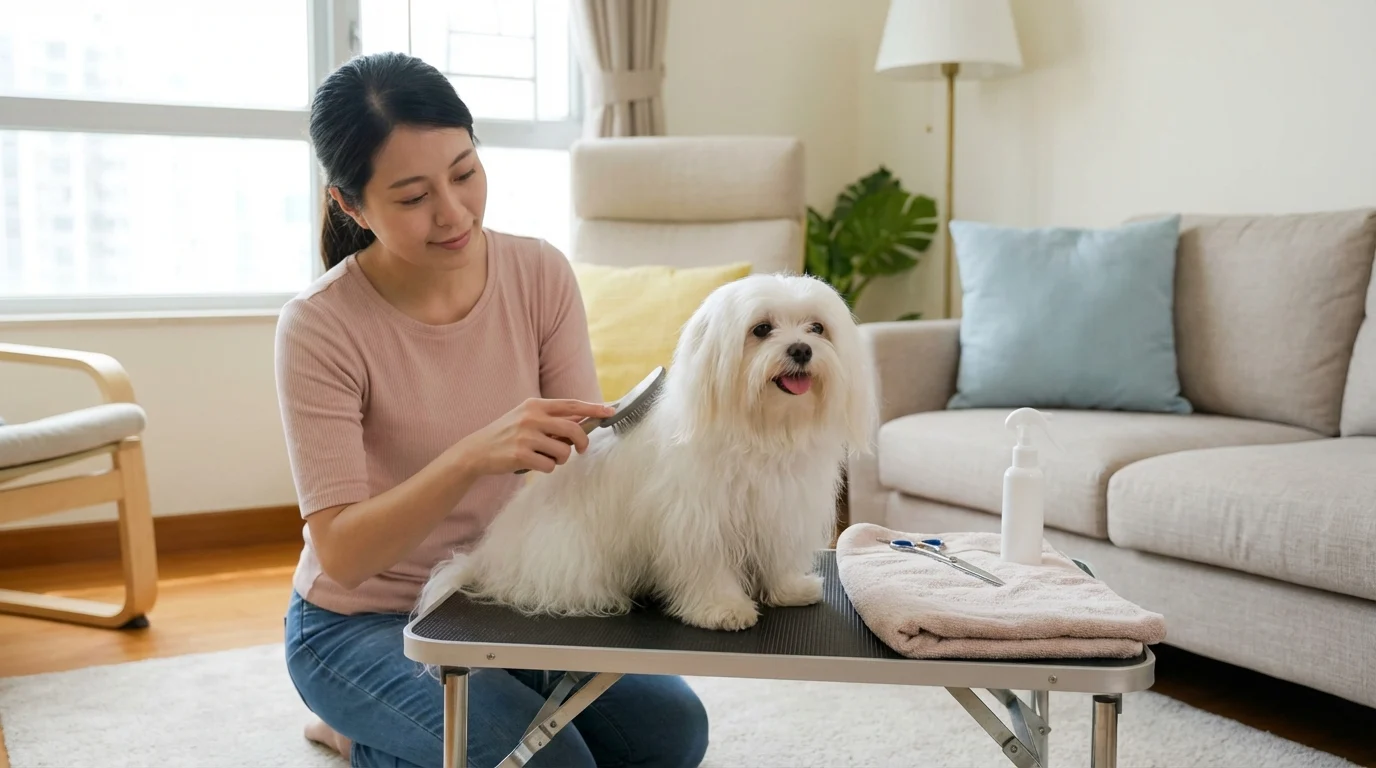
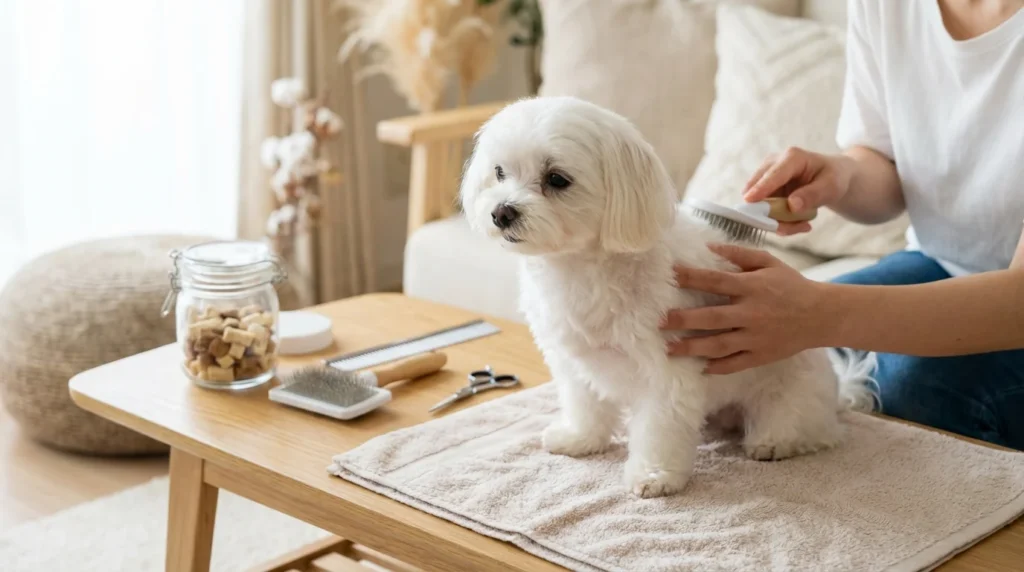
Before you start, gather everything you need. This makes the grooming process smooth and stress-free for both you and your dog. Choose a quiet and comfortable spot where your Maltese feels safe. A non-slip mat on a table can be very helpful.
Gathering Your Grooming Tools
Having the right tools is key for a successful Maltese dog grooming routine at home. Here are some basics:
- Slicker brush: Good for removing tangles.
- Metal comb: For checking for any hidden knots.
- Dog-friendly shampoo and conditioner: Made for sensitive skin.
- Tear stain remover: To clean around the eyes.
- Blunt-tipped scissors: For trimming hair around eyes and paws.
- Nail clippers or grinder: Choose what you are comfortable with.
- Cotton balls or soft cloth: For cleaning ears and eyes.
- Hair dryer (cool setting): To dry their coat completely.
Creating a Calm Grooming Space
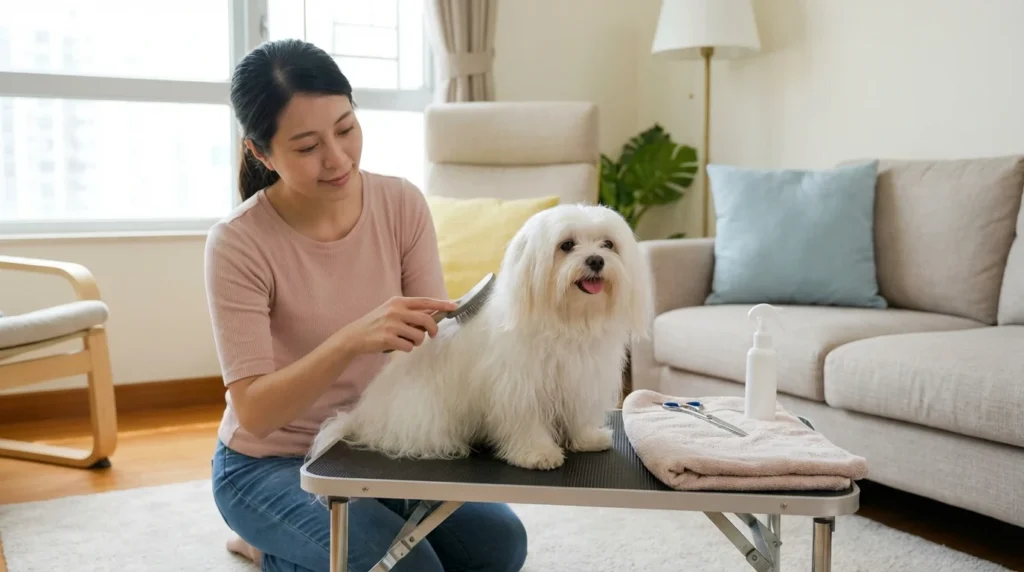
Your Maltese should feel safe and calm during grooming. Pick a spot that is free from loud noises or distractions. Talk to your dog in a soft, happy voice. Offer small treats to make it a positive experience. Start with short sessions and slowly make them longer as your dog gets used to it. Consistency is very helpful for establishing a good Maltese dog grooming routine at home.
Step-by-Step Maltese Dog Grooming Routine at Home
Here’s a detailed guide to help you with your Maltese’s grooming needs.
Brushing for a Tangle-Free Coat
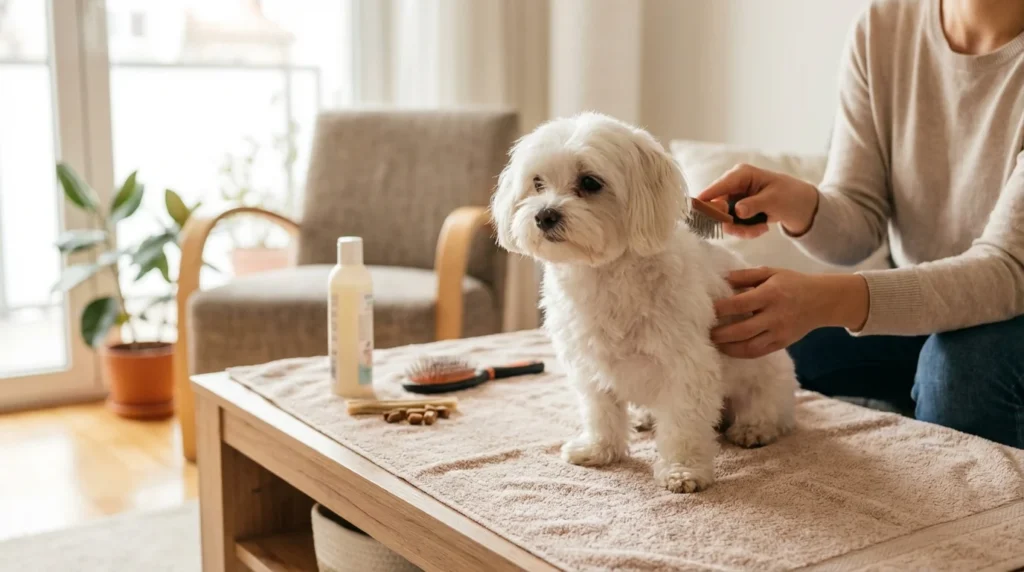
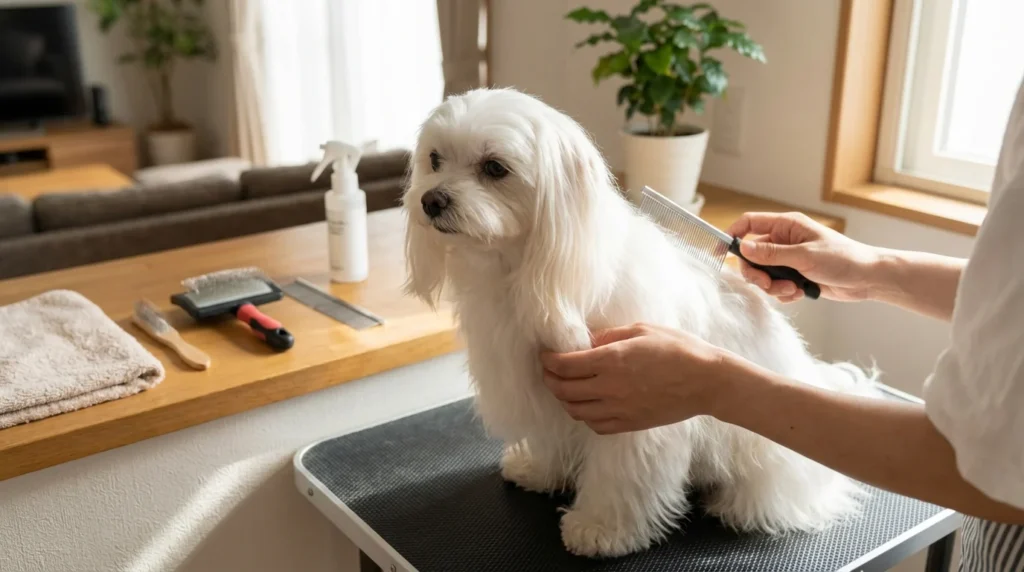
Brushing is the most important part of a Maltese dog grooming routine at home. It should be done daily or every other day. Use a slicker brush to gently go through their entire coat. Always brush in the direction of hair growth. If you find a tangle, do not pull. Instead, gently work it out with your fingers or the end of a metal comb. You can also use a detangling spray to help. After using the slicker brush, follow up with a metal comb to ensure no knots are left behind.
Bathing Your Maltese Like a Pro
Maltese dogs usually need a bath every 1-3 weeks, depending on how dirty they get. Always brush your dog before bathing to remove any mats. If you bath a matted coat, the mats can get tighter and be harder to remove. Use lukewarm water and a shampoo made for dogs, especially for white coats. Rinse thoroughly to make sure all soap is gone. Apply a dog conditioner, let it sit for a few minutes, then rinse again. Squeeze out excess water and towel dry gently. Finish drying with a hairdryer on a cool setting, brushing as you go to prevent tangles. Make sure their coat is completely dry to avoid skin issues.
Gentle Eye and Ear Cleaning
Maltese dogs often get tear stains under their eyes. Clean this area daily with a soft, damp cloth or a special tear stain remover made for dogs. Be very gentle. For ears, check them weekly for redness, bad smell, or excess wax. Use a vet-approved ear cleaner on a cotton ball to gently wipe the visible part of the ear. Never put anything deep into the ear canal. If you see signs of infection, it’s a good idea to talk to your vet.
Trimming Nails Safely
Nail trimming is vital. Long nails can be painful and lead to paw problems. Trim your Maltese’s nails every 2-4 weeks. Use sharp dog nail clippers or a grinder. Only trim the very tip of the nail, avoiding the quick (the pink part inside the nail that contains blood vessels and nerves). If you cut the quick, it will bleed and hurt your dog. If you are unsure, ask your vet or a professional groomer to show you how. Make this part of your regular Maltese dog grooming routine at home early on.
Caring for Teeth and Paws
Dental care is often forgotten but is very important. Brush your Maltese’s teeth daily or a few times a week with dog-specific toothpaste and a small toothbrush. This may help prevent dental problems. For paws, regularly check between their paw pads for any mats or foreign objects. You may also need to trim the hair between their pads to prevent slipping and to keep the area clean.
| Aspect | Detail |
|---|---|
| Breed Size | Small, Toy Group |
| Coat Type | Long, Silky, White Single Coat |
| Grooming Frequency | Daily brushing, baths every 1-3 weeks |
| Key Grooming Needs | Preventing mats, eye/ear cleaning, nail trims |
Common Mistakes to Avoid During Maltese Grooming
Even with good intentions, some common errors can make your Maltese dog grooming routine at home less effective or even stressful for your pet.
- Skipping Brushing: Not brushing often enough is the number one cause of mats.
- Bathing a Matted Dog: Water makes mats tighter and harder to remove.
- Using Human Products: Human shampoos and conditioners are not good for dog skin and can cause irritation.
- Not Drying Completely: A damp coat can lead to skin infections and irritation.
- Forcing It: If your dog is scared, don’t force them. Take breaks, be patient, and try again later.
Read More:- Senior Shih Tzu Care Tips Every Owner Should Know
Expert Tip: Making Grooming a Positive Experience
Start grooming when your Maltese is a puppy. This helps them get used to it early. Keep grooming sessions short and positive. Offer praise and small treats throughout. If your dog shows signs of stress, take a break. Never scold them for being uneasy. The goal is for your Maltese to see grooming as a normal and even pleasant part of their day. This approach is very helpful for maintaining a successful Maltese dog grooming routine at home.
| Task | How Often | What to Do |
|---|---|---|
| Brushing | Daily or every other day | Slicker brush, then metal comb |
| Eye Cleaning | Daily | Wipe with damp cloth/tear stain remover |
| Ear Check | Weekly | Look for redness, smell, wipe visible area |
| Dental Care | Daily to several times a week | Brush teeth with dog toothpaste |
| Bathing | Every 1-3 weeks | Use dog shampoo/conditioner, dry completely |
| Nail Trim | Every 2-4 weeks | Clip or grind tips, avoid the quick |
Things to Watch Out For During Grooming
While grooming, you have a great chance to check your Maltese for any changes. Look for lumps, bumps, dry patches, or fleas. Notice any new sores or areas of tenderness. If you see anything unusual, it’s wise to mention it to your vet. Being aware of these things as part of your Maltese dog grooming routine at home can help catch problems early.
Beyond Grooming: Keeping Your Maltese Healthy
A good grooming routine is just one part of keeping your Maltese healthy and happy. Their overall care also includes proper food, exercise, and regular vet visits. All these things work together to give your Maltese a good life.
Feeding Your Maltese
Choose high-quality dog food suitable for small breeds. Make sure the food meets their nutritional needs. Your vet can offer advice on the best diet for your specific dog. Always provide fresh water. Good nutrition can support a healthy coat and skin, making your Maltese dog grooming routine at home even easier.
Gentle Exercise for Your Small Dog
Maltese dogs are small but still need daily exercise. Short walks, indoor playtime, or fetching toys in the yard are all good options. Exercise helps keep them at a healthy weight and happy. It doesn’t need to be intense, just consistent.
| Category | Important Points |
|---|---|
| Diet | High-quality small breed dog food, fresh water |
| Exercise | Short walks, indoor play daily |
| Health Checks | Regular vet visits, check for lumps/bumps during grooming |
| Grooming Tools | Slicker brush, metal comb, dog shampoo, nail clippers, eye cleaner |
FAQs About Maltese Dog Grooming Routine at Home
Q1: How often should I brush my Maltese’s hair?
It’s best to brush your Maltese daily. If daily is not possible, try to brush every other day. This helps prevent tangles and mats from forming in their long, silky coat. Regular brushing is the core of any good Maltese dog grooming routine at home.
Q2: Can I use human shampoo to wash my Maltese?
No, it’s not a good idea to use human shampoo. Dog skin has a different pH balance than human skin. Human shampoos can dry out their skin, cause irritation, or lead to other skin problems. Always use a shampoo made specifically for dogs, ideally one for white coats if your Maltese is pure white.
Q3: What if my Maltese hates getting groomed?
If your Maltese dislikes grooming, start slowly. Do very short sessions and reward them with treats and praise. Be patient and gentle. You can also try to make grooming feel like a game. If they are very scared, talk to a professional groomer or your vet for more tips on making the Maltese dog grooming routine at home a more positive experience.
Q4: How do I prevent tear stains on my Maltese?
Tear stains are common in Maltese dogs. Daily cleaning around their eyes with a damp cloth or a pet-safe tear stain remover can help a lot. Make sure their eyes are free from hair, as long hair can irritate their eyes and cause more tearing. Good hygiene is an important part of a Maltese dog grooming routine at home for a clean face.
Q5: Is it okay to trim my Maltese’s hair short?
Yes, many Maltese owners choose to keep their dog’s hair in a ‘puppy cut’ or a shorter style. This can make the Maltese dog grooming routine at home much easier to manage, as it greatly reduces the chances of matting. If you’re not comfortable doing it yourself, a professional groomer can give your Maltese a stylish, shorter haircut.
Q6: What should I do if I accidentally cut the quick while trimming nails?
If you accidentally cut the quick, it will bleed. Don’t panic. Apply a styptic powder (available at pet stores) or cornstarch to the nail to stop the bleeding. Apply gentle pressure. If the bleeding doesn’t stop or you are worried, contact your vet. It’s a good idea to have styptic powder handy when you do nail trims as part of your Maltese dog grooming routine at home.
| Resource Type | What it Helps With |
|---|---|
| Online Videos | Visual guides for grooming steps, specific techniques |
| Local Groomers | Professional help, training tips, nail trims, full grooms |
| Vet Consultations | Health checks, advice on skin/ear issues, safe grooming practices |
| Pet Stores | Finding appropriate grooming tools, shampoos, and conditioners |